Psychedelic Therapy in Canada: Process, Science, Benefits, and Safety

Psychedelic Therapy in Canada: Process, Science, Benefits, and Safety
Psychedelic therapy is a structured therapeutic process where a psychedelic substance such as psilocybin is used with preparation, professional oversight, and integration support.
In Canada, psilocybin therapy is not the same thing as buying mushrooms online or taking a trip at home. Clinical and legal access is limited, and the strongest therapeutic models include screening, preparation, a supported session, and integration afterward.
How psychedelic therapy works
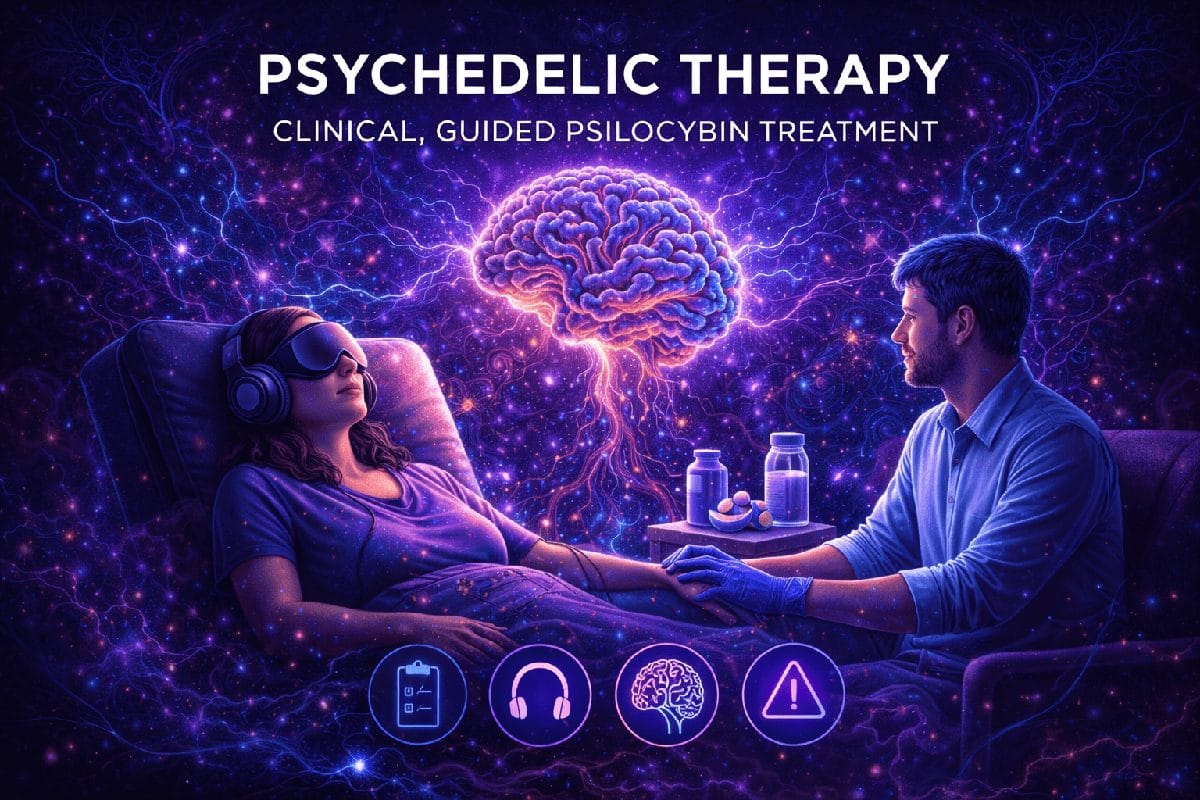
Most psychedelic therapy models begin before the session itself. A clinician or trained care team screens for mental health history, medications, cardiovascular concerns, substance use, and support systems. Preparation helps the person understand what may happen and how to approach difficult emotions if they arise.
During a supported session, the setting is designed to reduce fear and distraction. Music, eyeshades, calm language, and trained support can help the person stay with the experience rather than fight it. Afterward, integration turns insights into ordinary changes: conversations, journaling, therapy, habits, and decisions.
The session, the brain, and integration

Psilocybin is converted into psilocin, which interacts with serotonin receptors involved in mood, perception, and cognition. Research often focuses on how psychedelic experiences may temporarily loosen rigid mental patterns, increase emotional openness, and make therapy feel more accessible for some people.
The session is only one part of the process. Integration is where people make sense of what happened and decide what to do with it. Without integration, even a powerful experience can fade into a memory rather than become a useful change.
Therapeutic potential and mental health

Psilocybin-assisted therapy is being studied for depression, anxiety, end-of-life distress, addiction, PTSD-related symptoms, and emotional rigidity. Early results are interesting, but psilocybin is not a universal cure and should not replace medical care.
People with bipolar disorder, psychosis history, unstable mood, serious heart concerns, or complex medication regimens need special caution. A psychedelic experience can intensify emotions and body sensations, which is why professional screening matters.
Legal access in Canada

Psilocybin and psilocin are controlled substances in Canada. Health Canada says production, sale, and possession are illegal unless authorized. Legal therapeutic access may happen through clinical trials, the Special Access Program, or exemptions under the Controlled Drugs and Substances Act.
That means informal access and clinical access are very different. If someone is seeking treatment for a diagnosed condition, the safer route is to speak with a qualified health professional rather than treating online anecdotes as medical guidance.
Psilocybin therapy vs antidepressants

Antidepressants are regulated medications taken on an ongoing schedule under medical supervision. Psilocybin therapy is usually studied as a small number of supported sessions combined with psychotherapy and integration. They are not interchangeable tools.
Some people are interested in psilocybin because conventional medication has not worked well for them. Others should avoid psychedelics because of medication interactions or mental health risk. Never stop prescribed medication to use psilocybin without medical support.
Media, research, and public conversation

Psychedelic therapy has moved from fringe discussion into mainstream media, clinical research, podcasts, documentaries, and public policy debates. That visibility helps reduce stigma, but it also creates hype.
The balanced view is that psilocybin therapy may become an important mental health tool for some people, but it works best when treated seriously: screened, supported, integrated, and kept separate from casual recreational use.
FAQ
Is psychedelic therapy legal in Canada?
Only in limited authorized contexts such as clinical trials, the Special Access Program, or certain exemptions.
Is psilocybin therapy the same as taking shrooms?
No. Therapy includes preparation, support, screening, and integration. Taking mushrooms alone does not provide the same structure.
Can psilocybin replace antidepressants?
No one should treat it as a direct replacement without professional medical guidance.