Trip Setting in 2026: How Professionals Design It and How to Apply It at Home
Clinical psychedelic therapy protocols control six environmental variables: room design, sound, lighting, temperature, staff support, and integration, and each one is replicable at home with basic preparation even in a shared apartment.
Legal note (Canada): Psilocybin sold is for Clinical use happens under limited exemptions and research/therapy frameworks.
🧠 Why “Setting” Matters
Setting refers to the total sensory and social environment during a psilocybin experience: the room, sound, people present, and level of interruption. Environmental unpredictability is the primary driver of anxiety during psychedelic sessions, and reducing sensory surprises is the single most actionable way to improve outcome.
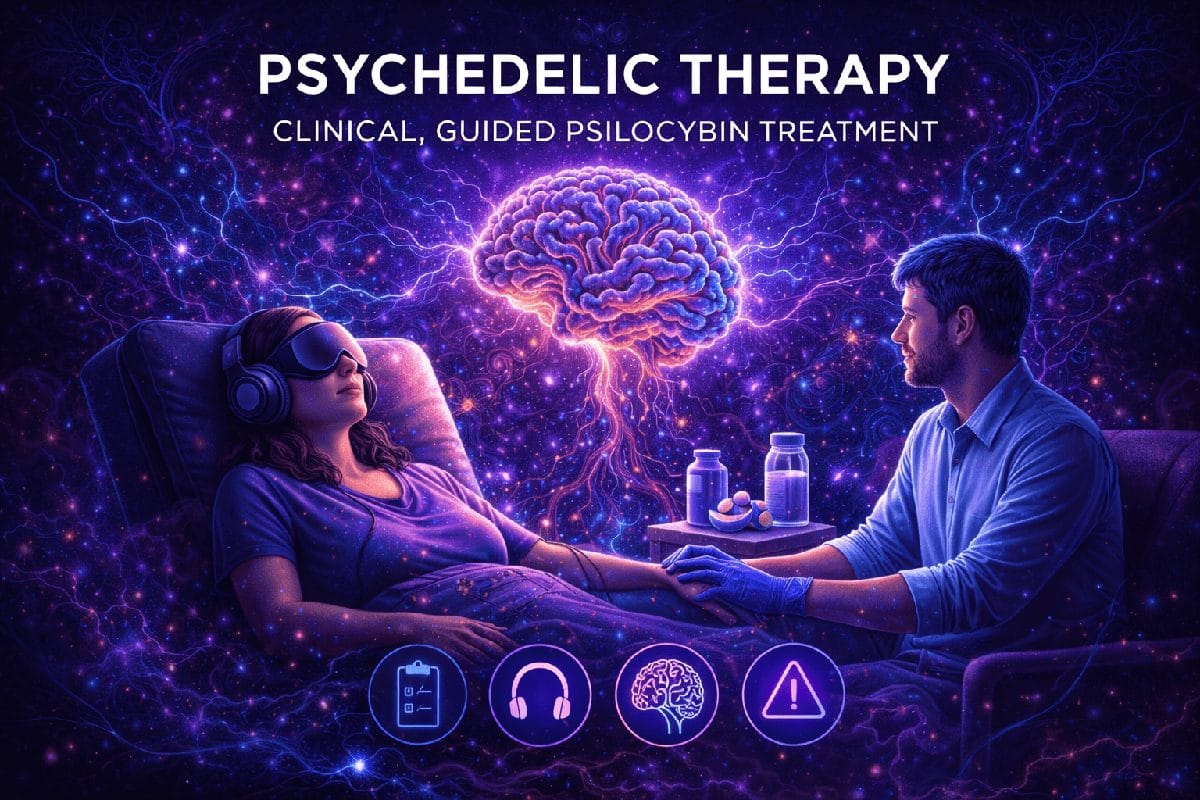
🏥 How Professionals Structure the Room
Clinical and university teams standardize six pillars to keep sessions steady and supportive.
1) Screening & Preparation
- Health review and exclusions (e.g., psychosis history, uncontrolled cardiovascular issues, MAOIs).
- One clear intention written down; informed expectations about timeline and possible difficult moments.
- Sleep 7–8h prior; light pre-session meal; no substance mixing.
2) Room Design
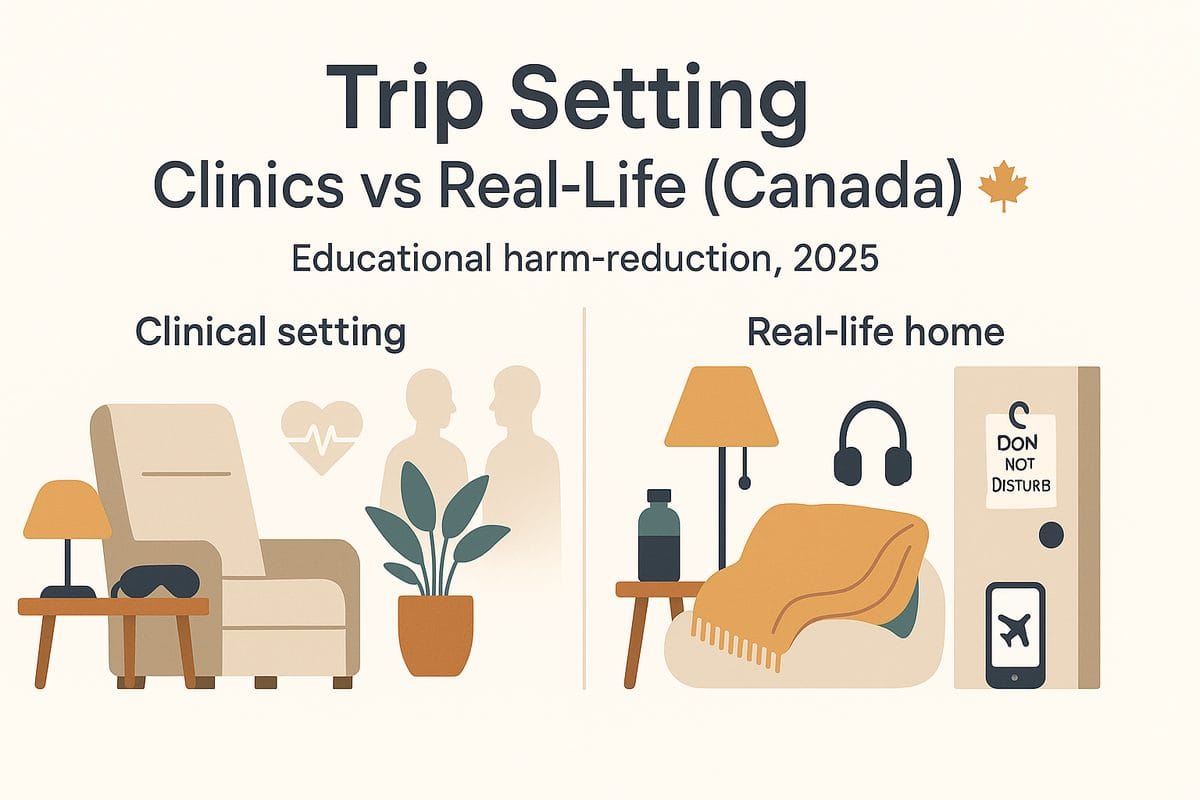
- Living-room vibe: recliner/sofa, soft warm light, plants, minimal clutter.
- Eye mask for inward focus; bathroom nearby; mirrors and work reminders removed.
- Temperature in the comfort zone; blanket within reach.
3) Music & Sound
- Pre-planned progression: grounding → exploratory → integrative.
- Low-surprise tracks early (60–80 BPM); participant controls volume.
- Headphones optional; “reset” track available if anxiety rises.
4) Staff & Monitoring
- Two trained guides present; calm, non-intrusive support.
- Vitals pre/post; escalation plan documented; emergency contacts ready.
- Short scripts: “You’re safe. This will pass. Let’s breathe together.”
5) Safety Protocols
- Avoid alcohol, stimulants, benzos, and MAOIs; hydrate modestly.
- If overwhelmed: change one variable: light level, posture, music, temperature, or room.
- Clear thresholds for seeking medical help (see “Red Flags” below).
6) Integration
- Next-day debrief; journaling prompts; gentle movement.
- No major life decisions for 24–48 hours.
The principle underneath: reduce cognitive load and keep stabilizers close, so the mind can wander safely.
Clinic vs Home: The Same Core Variables in Two Different Contexts
The key components of a safe psychedelic session are identical in clinical and home settings: a trusted support person, a controlled environment, a prepared sound playlist, a written safety plan, and post-session integration. The difference is the level of professional oversight, not the underlying structure.
People
- Clinic: Two trained guides.
- Home: One sober, trusted sitter who stays put and keeps the vibe steady.
Room
- Clinic: Curated, uncluttered, warm light.
- Home: One clean corner, dim lamp, blanket “nest,” cover mirrors.
Sound
- Clinic: Pre-sequenced playlist.
- Home: Simple playlist + one “panic-button” track.
Safety
- Clinic: Vitals + protocols.
- Home: Address card, dose/time written down, emergency contact, meds list.
Aftercare
- Clinic: Integration session.
- Home: Debrief next day, journaling, gentle walk, no big decisions.
🏡 Real-Life Setups That Actually Work
Effective home settings replicate three clinical principles: a defined calm space, a trusted person present or on call, and a prepared plan for redirecting anxiety if it arises. The setups below apply those principles to common living situations. Keep doses low to moderate outside clinical contexts.
Apartment / Condo
- Declutter a corner; dim lamp; blanket, eye mask, tissues, water, light snack, ginger/peppermint.
- Phone on airplane with one emergency bypass contact; “Do Not Disturb” note on the door.
- Headphones + white-noise app for hallway sounds; cover mirrors.
Shared House (2–3 people + sitter)
- Ground rules: no filming, no drop-ins, no alcohol.
- Main calm room + a “retreat room” if anyone feels overwhelmed.
- Sitter manages doors/phones and uses short supportive scripts.
Hotel / Airbnb
- Disable housekeeping; Do Not Disturb; bring playlist + eye mask; note room number on a card.
- Keep snacks simple; avoid hallway wandering; hydration moderate.
Backyard / Balcony
- String lights, cozy chairs, blankets; keep an indoor backup if weather or neighbors shift.
Urban Park (very low dose + sitter)
- Scout bathrooms/exits; bring layers, water, tissues; choose a quiet area; sunglasses help with anxiety.
- Avoid traffic, water, and night sessions.
📦 “Trip Box” Essentials
- Eye mask, tissues, water bottle, light snack, ginger/peppermint.
- Blanket or weighted throw; comfy clothes; notepad + pen.
- Pre-downloaded playlist; avoid bright screens and mirrors.
Sitter Scripts (Plain English)
- “You’re safe. You took [dose] at [time]. Waves pass. Let’s breathe slowly together.”
- “Let’s change one thing: lights up, sit with the blanket, new track.”
- “Name five things you can feel or hear right now.”
🛡️ Safety Core
Before
- Sleep 7–8h; light meal 3–4h before; hydrate modestly.
- No mixing with alcohol, stimulants, benzodiazepines, or MAOIs.
- Cancel criteria: unstable mood, illness, or major stress → reschedule.
During
- If anxious, change one variable: posture, light, sound, temperature, or room.
- Slow breathing (4–6 count), eye mask, familiar “reset” song.
- Card with address, emergency contact, dose/time, meds list near the door.
After
- No major decisions for 24–48h; warm shower; gentle food; short walk.
- Next-day debrief; journaling prompt: “What felt true and why?”
Red flags (seek sober help; consider medical care): chest pain, trouble breathing, fainting, head injury, uncontrolled vomiting, severe confusion.
🍁 Canada Context (Educational)
- As of 2025, psilocybin is controlled federally; limited clinical/research pathways exist. Policies evolve.
- Workplace and driving rules vary; understand local risks and obligations.
🕒 Two Simple Schedules You Can Copy
Solo, Low Dose, Apartment (~6h)
- 11:00 – Intent + checklist + light meal
- 12:00 – Airplane mode (one bypass), dose, music low
- 12:30 – Eye mask + slow breathing
- 14:00 – Stretch, tea, brief notes
- 16:00 – Land: soup/toast, warm shower
- 18:00 – Debrief text, early wind-down
Two Friends + Sober Sitter (~7h)
- 13:00 – Align rules, safe word, scripts
- 13:30 – Dose; sitter logs time/dose
- 14:00 – Quiet inward period
- 16:00 – Gentle conversation, fruit, water
- 18:00 – Warm landing playlist; lights up gradually
- 20:00 – Light meal, short walk, debrief








I think this is among the most important info for me. And i am glad reading your article. But should remark on some general things, The web site style is perfect, the articles is really great : D. Good job, cheers